
The Harbour of Rotterdam
In the second half of the nineteenth century, the German Ruhr region was heavily industrialized. It was of extra importance to the Dutch government to optimize port accessibility. The steel industry in the Ruhr area needed a lot of ore, which Rotterdam could easily transport via through the Rhine.
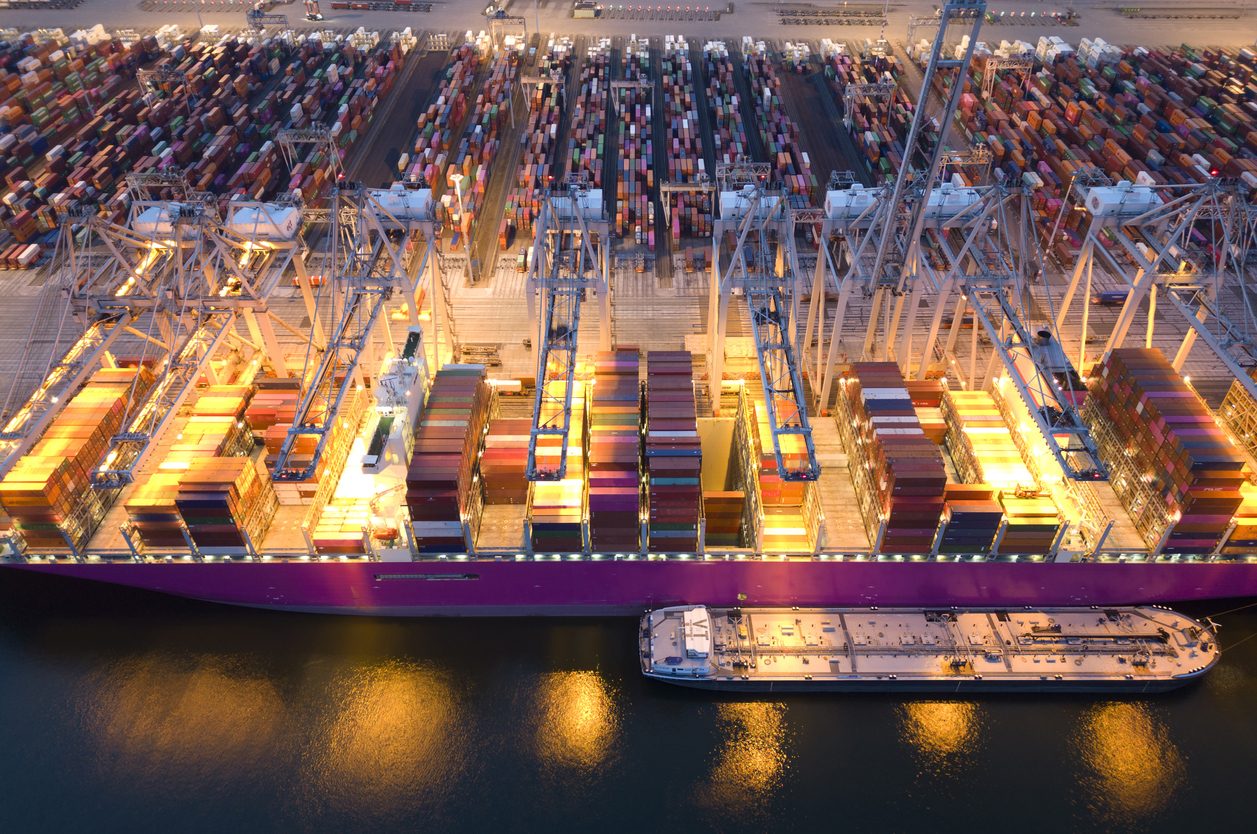
Due to the construction of the Europoort in the 1960s, mammoth tankers could now moor here. Another addition to the port was the Maasvlakte, which was built in 1970. A piece of sea was reclaimed for this purpose, so that companies could be established here. From 1962 to 2004, the port of Rotterdam was the largest port in the world. Nowadays, Rotterdam is the fourth largest, behind Shanghai, Ningbo and Singapore. Rotterdam is still Europe’s largest port.








 English (UK)
  German
  Spanish
  French
  Dutch
Dutch  Italian
  Portuguese
  English (United States)